
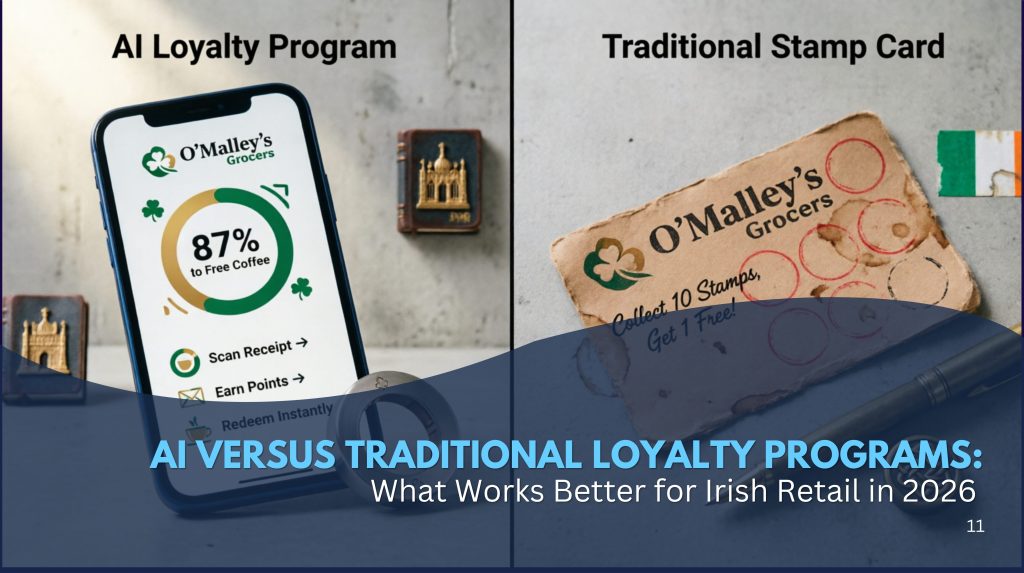
The loyalty stamp card has been a fixture of Irish retail for decades. Buy ten coffees and get the eleventh free. Collect points on every purchase and redeem them for discounts. Earn tier status by spending more. These programmes have been a staple of the Irish retail toolkit, and for a long time, they worked.
In 2026, the picture is more complicated. Customers carry wallets full of loyalty cards they rarely remember to use. Digital loyalty apps sit unopened on phones. Points expire unredeemed. The mechanics of traditional loyalty programmes have become so familiar that they generate very little genuine excitement or behaviour change.
Meanwhile, something more powerful has emerged. AI-driven hyper-personalisation is changing what loyalty means in retail, and ask-Ai is at the forefront of that shift in the Irish market.
What Traditional Loyalty Programs Actually Deliver
To be fair to the traditional model, loyalty programmes do deliver some genuine value. They create a reason for repeat visits. They provide retailers with purchase history data. They give customers a sense that their spending is being recognised, however modestly.
But the fundamental model is transactional rather than relational. The customer earns points. The points represent a future discount. The relationship between the customer and the retailer is mediated by a number on an app rather than a genuine understanding of who the customer is and what they actually want.
The result is a programme that increases retention at the margins but does very little to improve the quality of the customer experience, differentiate the retailer from competitors, or drive the kind of genuine advocacy that comes from customers who feel truly understood.
What Hyper-Personalisation Actually Means
Hyper-personalisation is a term that gets used loosely in retail marketing, but in the context of ask-Ai, it has a specific and meaningful definition. It means using real-time data about a customer’s behaviour, preferences, and purchase history to deliver interactions that feel genuinely tailored to that individual.
ask-Ai connects to existing customer loyalty data to deliver this kind of experience in the physical store. A returning customer who is recognised by the system can be greeted with product suggestions based on what they have bought before, what they have browsed previously, and what other customers with similar profiles have found useful.
This is not a generic “you might also like” algorithm. It is a contextually aware, real-time engagement that adapts to what the customer is doing right now, in the store, today. The difference in how this feels to a customer compared to receiving a points balance update is significant.
The Commercial Impact of Personalisation Over Points
The commercial case for hyper-personalisation over traditional loyalty points is well established in retail research globally, and it is beginning to show clearly in the Irish market as well.
Customers who receive personalised recommendations buy more per visit. They are less likely to leave without purchasing because the AI engagement reduces the friction between interest and decision. They are more likely to return because the experience felt useful and relevant rather than transactional.
Traditional loyalty programmes are primarily retention tools. They reduce churn by providing a switching cost. Hyper-personalisation through ask-Ai is both a retention tool and a revenue driver, because it actively increases the value of each customer visit rather than simply making it marginally more likely that the customer comes back.
Can You Have Both?
The good news for Irish retailers who have invested in loyalty programme infrastructure is that ask-Ai is designed to connect with existing loyalty data rather than replace it. The platform can use the purchase history and preference data that a loyalty programme has generated to deliver more personalised AI interactions.
In this model, the loyalty programme continues to function as the data collection and retention mechanism, while ask-Ai uses that data to deliver experiences that are genuinely more valuable to the customer. The two systems work together rather than in competition.
What ask-Ai adds is the real-time, in-store intelligence layer that translates loyalty data into meaningful customer engagement in the moment that matters: when the customer is standing in the shop, deciding what to buy.
The Shift Customers Can Feel
The most telling measure of whether a loyalty approach is working is whether customers notice it and respond positively. Ask any Irish retailer about their stamp card programme and they will tell you that redemption rates are falling, that customers frequently forget their cards, and that the programme generates loyalty in name more than in practice.
Ask retailers who have deployed ask-Ai about the customer response, and the feedback is different. Customers engage with the kiosk. They come back to continue conversations they started on a previous visit. They share the experience with friends. They feel, in the truest sense of the word, that the store understood them.
That is what loyalty looks like when it is built on genuine personalisation rather than points accumulation.To see how ask-Ai’s hyper-personalisation can work alongside or instead of your existing loyalty programme, book a free consultation at askai.ie, email info@e-retail.ie, or call 01 455 9511. The team is at Neolith House, Davitt Road, Dublin 12, Ireland.